The Shopkeeper Who Named Portland With a Coin Toss
Portland, Oregon was started by a shopkeeper. He built a log store by the river, named the town with a coin toss, and later sold it for leather.
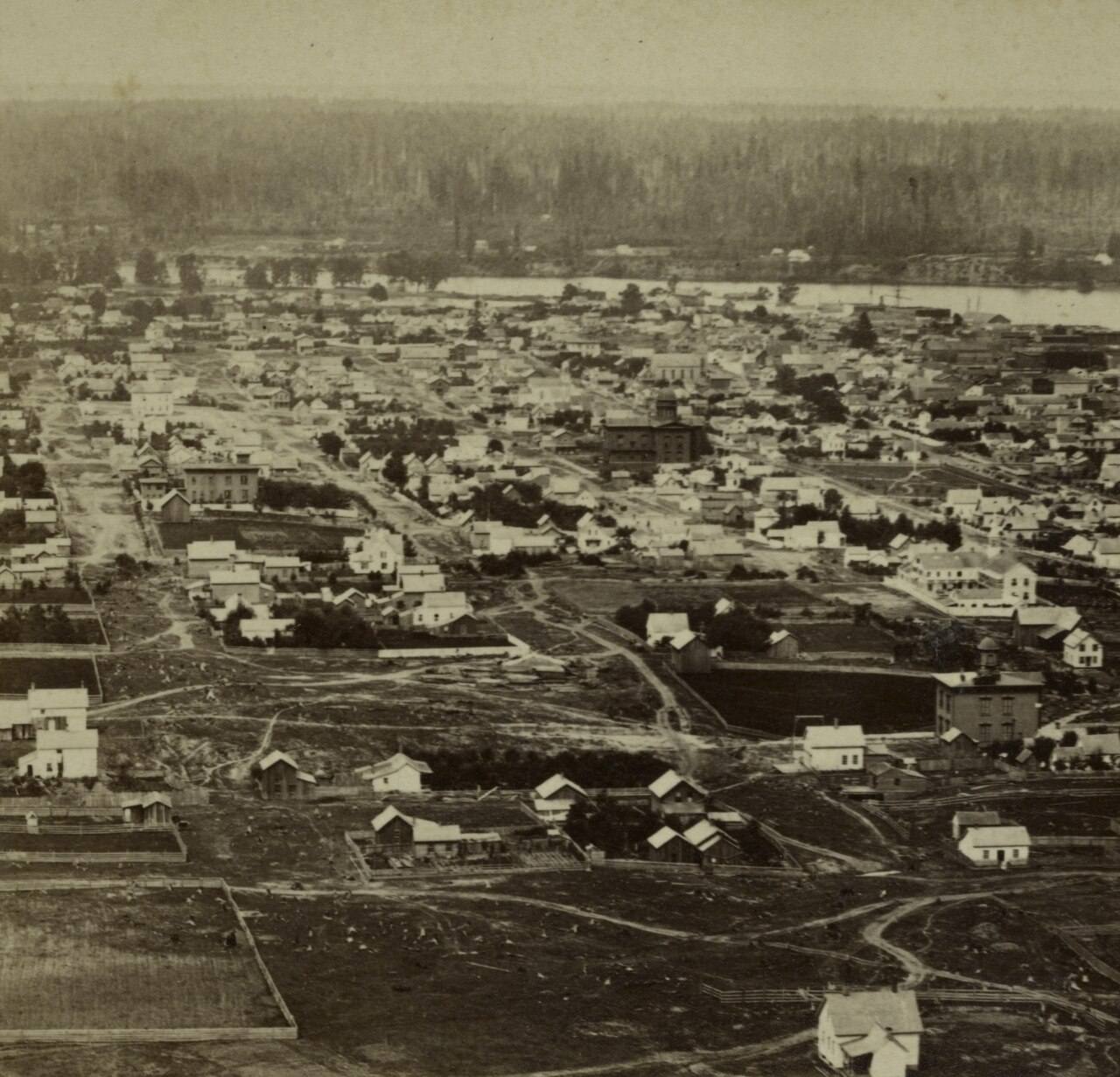
A clerk sent west with a stock of goods
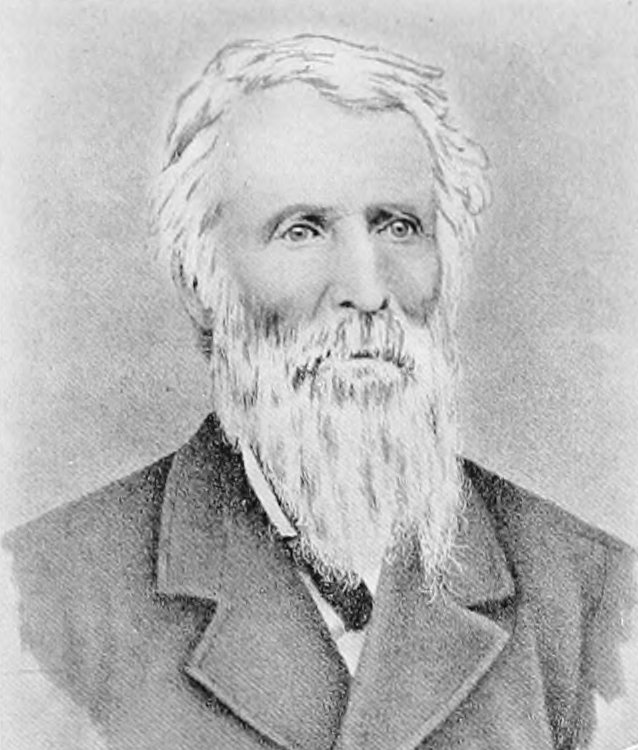
Francis Pettygrove was born in Calais, Maine, around 1812. He worked as a merchant's clerk in New York City. In 1842, a company there sent him by ship to Oregon City to open a store.
He did not go alone. He sailed aboard the Victoria with his wife and child, and with his sister, her husband and their four children. His first child was born at the Sandwich Islands along the way. They reached Oregon in 1843. At Vancouver, he arranged for a Hudson's Bay Company schooner to carry his goods up the Willamette River, and in Oregon City he opened his store in partnership with George Abernethy.
So the founder of Portland was, before anything else, a man who had been sent to open a shop.
Fifty dollars and a clearing
Twelve miles downstream from Oregon City, on the river, there was a place called The Clearing. A man named William Overton had a land claim there. Pettygrove paid him $50 for half of it.
Next door was the land of Asa Lovejoy. The two men decided to build a town on it, and Captain John Couch encouraged them. In 1845 they hired a surveyor, Thomas A. Brown, to lay it out: sixteen blocks, each 200 feet square, along the river. People called it Little Stump Town.
One coin, best of three
They still needed a name. Lovejoy wanted Boston. Pettygrove wanted Portland, after the city in Maine. They could not agree, so they tossed a coin, best of three. Pettygrove won.
The coin was an 1835 copper cent. It survives, and it belongs to the Oregon Historical Society. Had the toss gone the other way, Oregon would have a Boston.
The store by the river
Pettygrove was a shopkeeper first, so he did what shopkeepers do. He built a small log store near the river. He hired a married couple to run it. He paid for a wharf. By 1846, the Oregon History Project places a warehouse, a wharf and a store at the foot of Washington Street, and the town's first wood-frame house went up the same year.
The lots themselves were nearly free. Lovejoy and Pettygrove sold them cheaply, and gave some away to people who agreed to build a cabin. The land was never the real offer. What they were selling was neighbors.
That is the part we keep coming back to. The first store in a place rarely looks like much: a small building near the water, run by a couple someone hired. But it is a promise to the next person to arrive. You can stay. Someone here will sell you what you need.
Selling the town
It paid off. By 1848, Pettygrove was one of the richest men in the Oregon Territory. In late 1845, Lovejoy had sold his half of the townsite to Benjamin Stark. Pettygrove then sold the entire 640-acre townsite, Stark's share included, to Daniel Lownsdale for $5,000 worth of leather. For a $50 investment, that is a hundredfold return.
He did not stay. In 1851, with L. B. Hastings, he started another town, Port Townsend, on Puget Sound in what is now Washington State. He died there in 1887. The city he named with a penny kept growing without him.
Why we start in Portland
Tongraal's first doors open in Portland, and then, city by city, across the United States. It seemed right to begin this series here.
Every shop on Tongraal has a real door and a real address. Each shopkeeper picks twenty pieces, the ones they are proudest of. There is no dropshipping, and there are no trackers. It is a small idea, the same one that built a log store by a river in the 1840s: a person you can walk up to, and something worth walking in for.
This is the first story in The First Shop, a series about the shop that started each American city. Somewhere on a street near you, a door like that is waiting to be walked through.
Not everything should be everywhere.
Sources
- Wikipedia, Francis Pettygrove
- Oregon Historical Society, Oregon History Project, Town Beginnings
- Images: Carleton E. Watkins, Panorama of Portland and the Willamette River, Oregon (1867), New York Public Library, via Wikimedia Commons; portrait of Francis Pettygrove from Joseph Gaston and George H. Himes, The Centennial History of Oregon, 1811–1912, via Wikimedia Commons. Both in the public domain.